Male heirs and pressure on women to bear children
Mothering SundayMale heirs and pressure on women to bear children form a recurring system of power in the novel: the expected son is treated as a route to fortune and masculine status, while women’s bodies, marriages, and maternal bonds are made subject to male decisions. The contrast between Ashley Hunter’s treatment of his wife and the workhouse’s handling of unmarried mothers shows that the pressure takes different forms across social classes, but repeatedly limits women’s control over pregnancy and children.
Heirship as household power
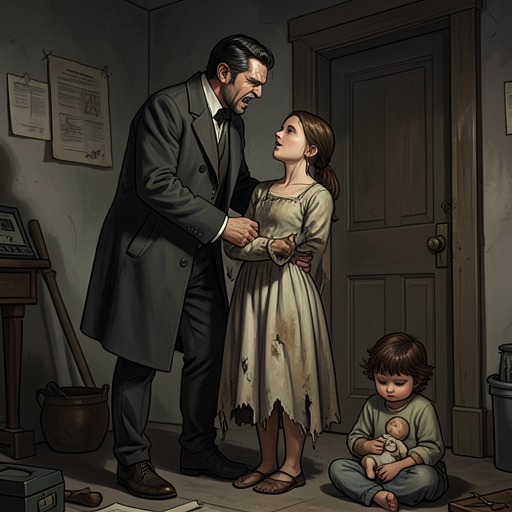
The opening birth scene makes the demand for a son explicit. As Lady Lavinia Huntley labours, Ashley Hunter paces the landing and insists that the suffering will be worthwhile if the child is a boy. He has selected the midwife himself and dismisses Zillah’s objection that Lady Lavinia should have a proper doctor. When he catches Zillah’s arm painfully, his authority is not merely an expectation about the child’s sex: it is physical and backed by threats. He warns that if the child is a girl, Zillah knows what she must do, and threatens the asylum for his wife and the workhouse for the maid if the order is not carried out.
The newborn’s sex turns that threat into action. When Zillah reports that the baby is a girl, Ashley’s hands clench; he orders her to get rid of the child, throws a pillow at her, and warns her never to speak of what happened. He then leaves to have Matthews prepare a grave. The sequence reduces a daughter to a failed outcome in a plan for inheritance, while making Zillah responsible for concealing the violence. The baby’s bluebell-coloured eyes and soft blond curls, like her mother’s, briefly establish her as an individual before Ashley’s command attempts to erase her.
Marriage and the value of a son
The pressure on Lady Lavinia is sustained by property as well as by Ashley’s personal demands. Treetops Manor was a wedding gift from her father, and she once imagined its nine bedrooms filled with children. But Ashley’s uncle left a complicated will: his great wealth was to pass to the first of his two nephews to produce a male heir. Ashley has not secured that inheritance, and his younger brother remains unmarried. Lady Lavinia and Ashley meanwhile live on the generous allowance left to her by her paternal grandmother. Ashley blames his wife for not giving him a son who could unlock a business and a fortune.
Her marriage began in love and expectation. On the wedding day she believed that Ashley loved her; after her father’s death, she thought she still had a devoted husband. She eventually understood that he had married her for her wealth and for the son she was expected to bear. The shift from romantic promise to dynastic calculation leaves her living mostly in a separate wing of Treetops Manor and seeing her husband only when necessary. She knows that he keeps a mistress in a cottage in Stockingford, but the possibility that this woman might conceive matters chiefly because another son could alter the inheritance contest.
The three tiny graves of Lady Lavinia’s stillborn daughters, which she tends in the orchard, give the heir question a history of repeated loss. Seeing a newborn or visiting the workhouse makes her feel anew what childlessness has cost her. She would have taken in a workhouse baby and raised the child as her own, but Ashley would not agree. Her desire to mother a child therefore exists alongside, and is obstructed by, a husband’s control over which children may belong in their household.
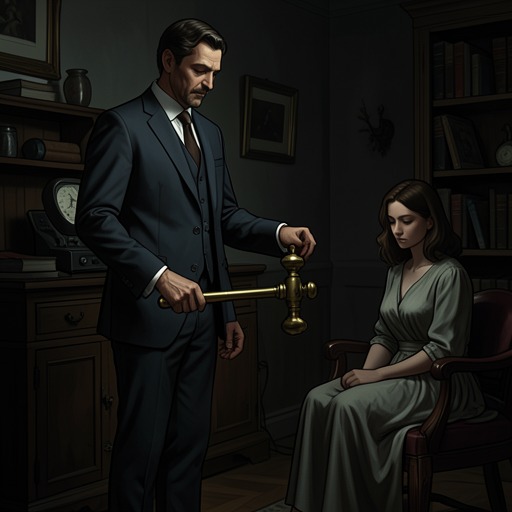
That control reappears when Ashley proposes that they resume sharing a bed. Lady Lavinia remembers the graves and fears another pregnancy and another loss; she also feels the force of the marital expectation that she cannot simply refuse her husband. When she gently recalls how their earlier attempts ended, Ashley dismisses the risk, asks whether she wants a child, and calls her unnatural for hesitating. He then declares that he will sleep in her room and instructs her to present them to a dinner guest as a loving couple. The scene makes reproduction part of household performance as well as private life: her grief is treated as an obstacle to his purpose, while appearances are arranged to serve his standing.
Pregnancy, stigma, and institutional coercion
The workhouse plot extends the pressure beyond marriage. Cissie Burns tells Sunday Small that she is pregnant after Albert Pinnegar forced himself on her. She hopes that the child will give her someone of her own to love, and believes she is being sent to a pleasant place in the countryside where she can care for the baby. Instead, when the carriage arrives to take her away, she recognizes it as the one used to transport people to Hatter’s Hall asylum. Miss Frost remains impassive as Cissie protests that she had been promised a place where she could keep and care for her child.
Cissie’s pregnancy is then used to discredit her. She accuses Albert Pinnegar, but Miss Frost calls her wicked and claims that she has been sexually available to male inmates. Cissie answers that women and men are not allowed to mingle, exposing the contradiction in the accusation. The men force her down and bring out a straitjacket; Sunday intervenes and kicks one of them to loosen his hold. The scene shows how an unmarried woman’s pregnancy can be treated not as evidence of harm requiring protection, but as grounds to confine and silence her. The narrative also states that many unmarried mothers sent to the asylum lose heart and die there, particularly when no one remains to seek their release.
The uncertainty surrounding Cissie’s baby continues after her removal. When Lady Lavinia asks what happened to the child, the official answer is that it appears to have died at birth. She privately suspects that the baby may instead have been sold to a childless couple, but the evidence does not confirm that suspicion. The contrast between the uncertain record and her suspicion underlines how little reliable information is available to the women seeking answers, and how easily a mother and child can be separated without an account they can verify.
Different women, unequal choices
Cissie’s experience foreshadows what happens to Daisy Branning. After Sunday leaves the workhouse, Daisy is assaulted by Albert Pinnegar, who threatens to send her brother, Tommy Branning, to Hatter’s Hall if she tells anyone. When Sunday discovers Daisy’s pregnancy, Daisy explains that Pinnegar began summoning her to his office and then hurt her. Sunday recognizes the danger in reporting him immediately: Cissie had been promised a safe destination and was instead taken away in the asylum carriage. She therefore comforts Daisy, hides the pregnancy beneath loose clothing, and delays disclosure while they consider what to do.
Daisy’s response also differs from Cissie’s hope of keeping her baby. She calls the unborn child evil because it will contain a part of Pinnegar and asks whether someone could take it. Sunday opposes treating the child as blameworthy, but her appeal comes from her own experience of abandonment: she was left on the steps of the workhouse and grew up without a mother or father. She remembers imagining that her mother would return, then accepting that she might be dead or might simply have not wanted her. That history gives her plea its force, but it does not remove Daisy’s distress. Daisy feels ashamed and carries a burden that Sunday cannot carry for her.
These differences sharpen the novel’s account of reproductive pressure. Lady Lavinia has wealth and a home, yet Ashley restricts her choices and defines her worth through a male heir. Cissie and Daisy face sexual violence, the stigma attached to unmarried pregnancy, and the threat of institutional confinement or separation from their children. Their circumstances are not interchangeable: class changes what protection is available and whose decisions carry authority. Across these plots, however, pregnancy does not guarantee a woman control over her body or her relationship with her child.
The meaning of motherhood and inheritance
The heir motif links private grief to material power. Ashley’s interest in a son is tied to an inheritance, a business, and the continuation of male privilege; his treatment of a daughter as something to dispose of reveals the cost hidden inside that calculation. Lady Lavinia’s longing for children, by contrast, is expressed through imagined family life, the graves she tends, and her wish to adopt a workhouse baby. Her maternal desire is not simply the mirror image of Ashley’s dynastic ambition: she wants to care for a child, while he values the son as an heir.
The stories of Cissie and Daisy further test any easy ideal of motherhood. Cissie hopes to love the baby conceived through assault, while Daisy cannot separate her pregnancy from the violence that caused it. Sunday’s defence of the unborn child is shaped by abandonment, yet she cannot decide for Daisy. The novel thus presents maternal attachment as consequential but not uniform, and shows how poverty, stigma, male violence, and institutional power narrow the choices available to women. The repeated demand for a male heir is not only a family expectation; it is one part of a wider order in which men and institutions claim authority over women’s pregnancies and children.